

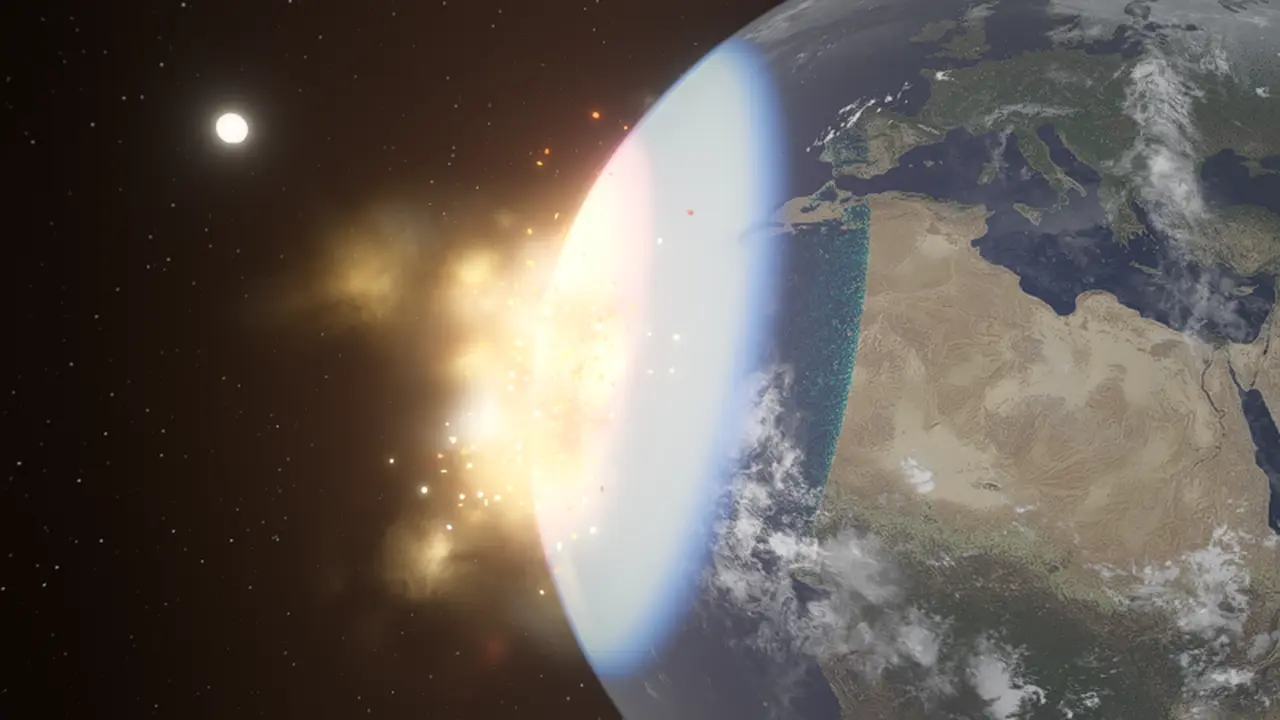
Universe Sandbox, Giant Army's physics-based space simulator, received Update 36.4 on 28 October 2026, followed the same day by a small 36.4.1 fix. The developers call it "Scratching the Surface". It rebuilds the technology behind the game's ocean and atmosphere simulation, lets players edit barycenters, reorganizes the Simulation panel and adds a new simulation of the exoplanet β Pictoris b.
A New Foundation for Surface Simulation
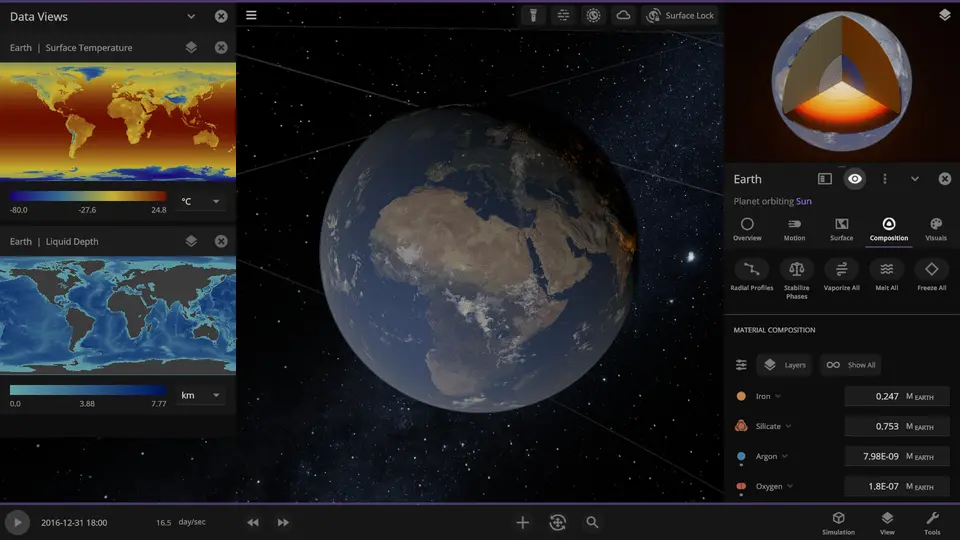
Universe Sandbox simulates what happens on the surfaces of planets and moons, including temperature, gas and liquid flow, and where materials end up. For Update 36.4, Giant Army rewrote all of that code using Unity's Data-Oriented Technology Stack (DOTS). Unity is the game engine Universe Sandbox is built with. Visuals that rely on surface data, such as the glow of hot surfaces and the color and opacity of atmospheres, now use the new DOTS data too.
Players aren't meant to see a difference yet. The update notes say "You shouldn't notice any changes in how object surfaces are simulated." The work is part of the developer's long-term plan to move its simulation systems to DOTS, to improve performance and give future features a stronger base.
Objects should look better, though. Sphere meshes are now quadspheres, which reduces "pole pinching", spreads surface polygons more evenly and makes smooth objects look smoother and bumpy objects look bumpier.
Editable Barycenters
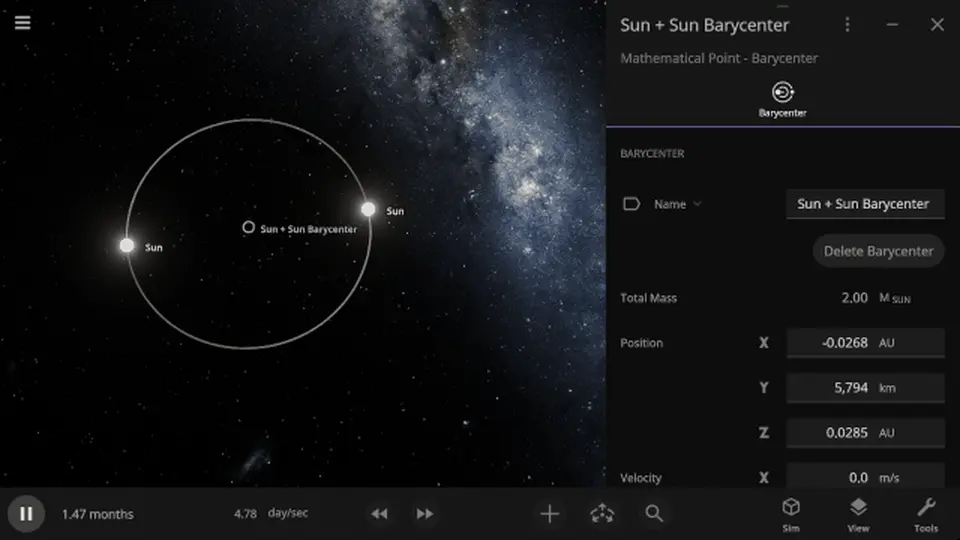
A barycenter is the center of mass that two or more objects orbit together. Players can now edit a barycenter's position and velocity, which changes the orbits of every object tied to it at once. They can also create binary barycenter systems and nest them to build hierarchical systems. A related fix makes edits to nested barycenters carry through to all the objects linked to them.
β Pictoris b and Its Magnetic Field
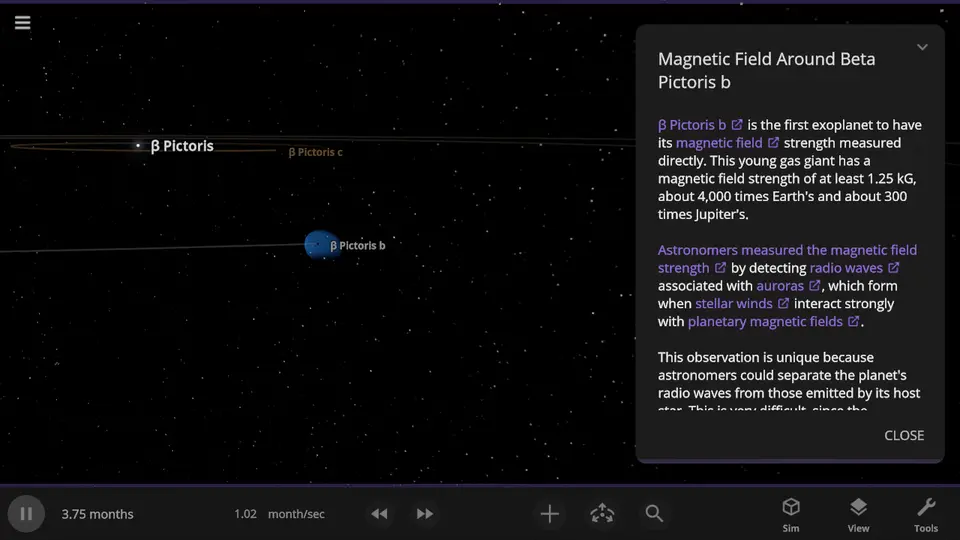
The update adds a simulation of the β Pictoris system, found under "Magnetic Field Around Beta Pictoris b". Its planet, β Pictoris b, is the first exoplanet to have its magnetic field directly measured. The simulation's in-game description says the young gas giant's field is at least 1.25 kG, about 4,000 times Earth's and about 300 times Jupiter's. Astronomers measured it by detecting radio waves linked to auroras, which form when stellar winds interact strongly with a planet's magnetic field.
The update also corrects the density of another exoplanet, PSR J1719-1438 b, to 23 g/cm³.
Easier Settings and Interface Changes
- The Simulation settings are now split into four tabs: Overview, Forces, Matter and Stats.
- The minimized object properties panel is less obtrusive and more flexible, especially with several objects selected.
- A new option keeps the advanced simulation settings pinned open.
- The Add Moons action now works for dwarf planets and other non-planetary objects in the game, such as Quaoar's moon Weywot.
- Brazilian Portuguese is now supported.
Notable Fixes
- A liter conversion error that showed volumes 1 million times too small has been fixed.
- Adding compact objects, such as black holes or neutron stars, as orbital parents no longer slows the simulation down heavily.
- Volatiles are no longer created with more mass than expected. Since 36.4.1, they leave an object at a random temperature between its minimum and maximum, rather than at its average temperature.
- Data views no longer flicker or show the wrong data on AMD graphics cards.
- Several crashes are fixed, including one when loading a new simulation with the Planetscaping tool open.